
What does it truly mean to be a writer in today’s world—and why can’t creativity be taught in classrooms?
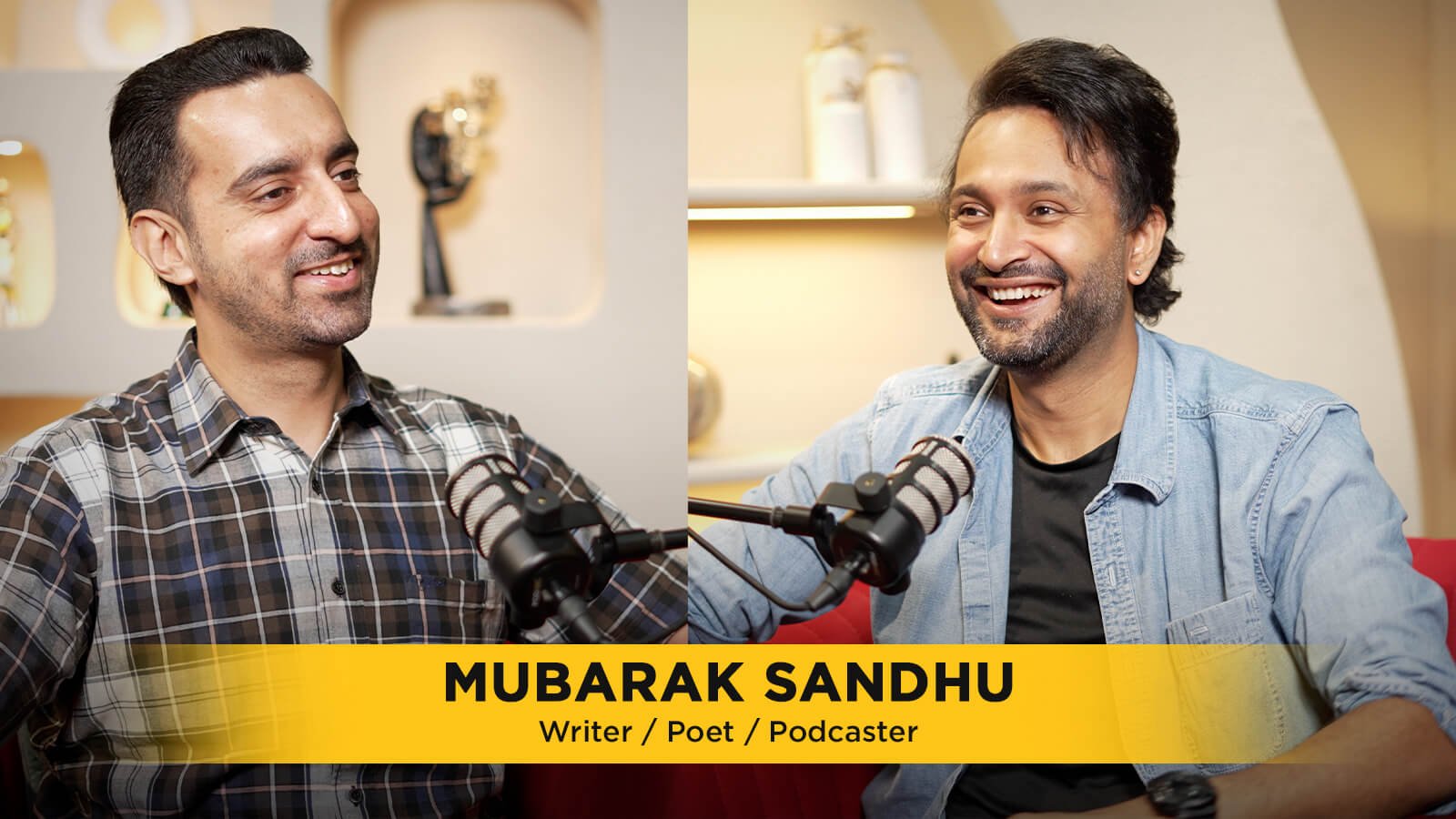
In this thoughtful and honest episode of The Supreet Singh Show, Supreet Singh sits down with Mubarak Sandhu, Writer, Poet, Editor, Podcaster, and Motivational Speaker, for a deep conversation on poetry, discipline, youth, and authenticity.
Some conversations don’t aim to entertain; they aim to awaken. This episode unfolds as one such quiet, powerful dialogue between two friends who once shared the predictability of engineering and later chose the uncertainty of art, literature, and honest expression. What emerges is not advice, not motivation, but a mirror held up to today’s youth, educators, writers, and society at large. In a world overwhelmed by noise, this conversation reminds us that depth still exists and it matters.
Across India, meaningful long‑form conversations are becoming rare. That is why platforms hosted by voices among the top podcasters in India matter. When discussions slow down and breathe, they give space to thought, doubt, learning, and truth. This episode becomes one such breathing space.
Writing, as discussed here, is not something that begins with instruction. It arrives quietly, often in childhood, unannounced. A school poem written in the fourth or fifth grade. A feeling expressed before it was fully understood. Writing grows with observation, not certification. It matures when silence meets attention. Many writers begin in unrelated professions, such as engineering, management, and administration, not because they lack passion, but because stability is rewarded more than sensitivity. Yet, somehow, words find their way back. They always do.
Writing is not learned; it is an inbuilt skill that manifests over time. The truth of this statement lies in how writing responds to life. The more closely you observe pain, joy, injustice, distance, love, and contradiction, the more language begins to sharpen itself. Writing grows alongside emotional maturity, not academic timelines. This is why some of the finest writers did not study literature, but life itself.
Poetry, within this journey, emerges not as rebellion but as discipline. Traditional poetry values rhyme not to restrict emotion, but to give it rhythm. Rhyme offers balance and memorability; it anchors feeling into form. Shayari, often seen as different, is essentially poetry shaped through cultural language. Whether it is a couplet or a stanza, the intention remains the same—to say what prose cannot carry alone. Modern poetry experiments freely, sometimes abandoning rhyme altogether, yet when it does so without intention, it risks losing its soul. Poetry may evolve, but it must remain honest.
Poetry’s essence lies in rhyme; without rhyme, it loses its traditional charm.” This is not a rejection of modern writing, but a reminder that structure exists first to be understood, then respectfully bent. True creativity knows both freedom and foundation.
Respect for teachers and discipline shapes a student’s character; its decline harms education. This observation is rooted in experience. Discipline is not fear; it is care expressed through structure. And respect is not submission; it is acknowledgment. Both begin in homes long before they reach classrooms. When families and institutions stop reinforcing shared values, learning becomes transactional instead of transformational.
Youth today face pressures unknown to earlier generations. Technology delivers knowledge instantly but steals patience quietly. Social media amplifies voice but shortens attention. Creativity exists, but it competes with distraction. Many young people feel overwhelmed, stimulated but unfulfilled, informed but disconnected from themselves.
Technology brings distractions but also opportunities; balance is key. The balance lies not in rejection, but in intention. Social media can build platforms, but it cannot replace depth. Young writers and thinkers must learn to create before consuming, to read longer than scrolling permits, and to protect their attention as they would their health. Without this awareness, creativity becomes performative rather than purposeful.
The idea of influence also comes under scrutiny. The term “influencer” is now associated with numbers, branding, and visibility. But real influence does not announce itself. It shows up quietly—through teachers who care, mentors who guide without expectation, parents who correct with compassion, and individuals who serve without seeking cameras. Real influencers inspire positive change beyond social media fame. True influence improves lives without measuring reach. It builds character, not engagement. It pushes people toward dignity rather than display.
Artists, particularly writers and poets, carry a specific burden in society. Sensitivity is both their gift and their vulnerability. They observe injustice more closely, feel contradictions more deeply, and sense discomfort earlier than others. Yet, speaking truth openly often invites resistance. This creates an internal tension between honesty and safety, expression and patience.
An artist is sensitive to injustice and societal issues but must balance expression with patience. Wisdom lies in choosing timing over impulse, depth over noise. Some truths need time to land. Others demand subtlety. Art, when honest, finds its way even through silence.
Throughout the episode, mentors and real‑life inspirations are acknowledged—not celebrities, but individuals grounded in humility and service. People who teach, heal, build, and guide without asking for recognition. These figures shape values through action, not slogans. They remind us that learning never ends, and growth is always communal.
The philosophy of life shared toward the end offers a simple yet powerful frame: the 25–75 rule of happiness. Stay within 75 percent happiness, never fall below 25 percent emotional well‑being. This rule is not about control, but resilience. It allows space for sadness without letting it dominate. It encourages joy without excess. It recognizes that emotional balance, not emotional denial, leads to peace.
Live authentically; do not lose yourself in fakeness, as it leads to distress. Authentic living is not loud. It is a quiet alignment—between words and actions, values and choices, inner life and outer behavior. It means accepting imperfection without creating false identities to hide it.
This episode, shared through The Supreet Singh Show, finds its rightful place among the conversations led by the best podcasters in India—the ones choosing depth over virality. When a podcaster in Mohali brings such nuanced discussion to national attention, it bridges regional experience with universal questions. It proves that meaningful dialogue does not require spectacle, only sincerity.
In an age of speed, this conversation asks us to slow down. To read again. To write honestly. To respect teachers. To guide our youth gently. To influence responsibly. To live without masks. These ideas won’t trend overnight, but they endure. The measure of a good life, like good writing, is not how loudly it is seen, but how deeply it is felt. And perhaps that is the greatest lesson shared here—that growth happens quietly, one thoughtful conversation at a time.