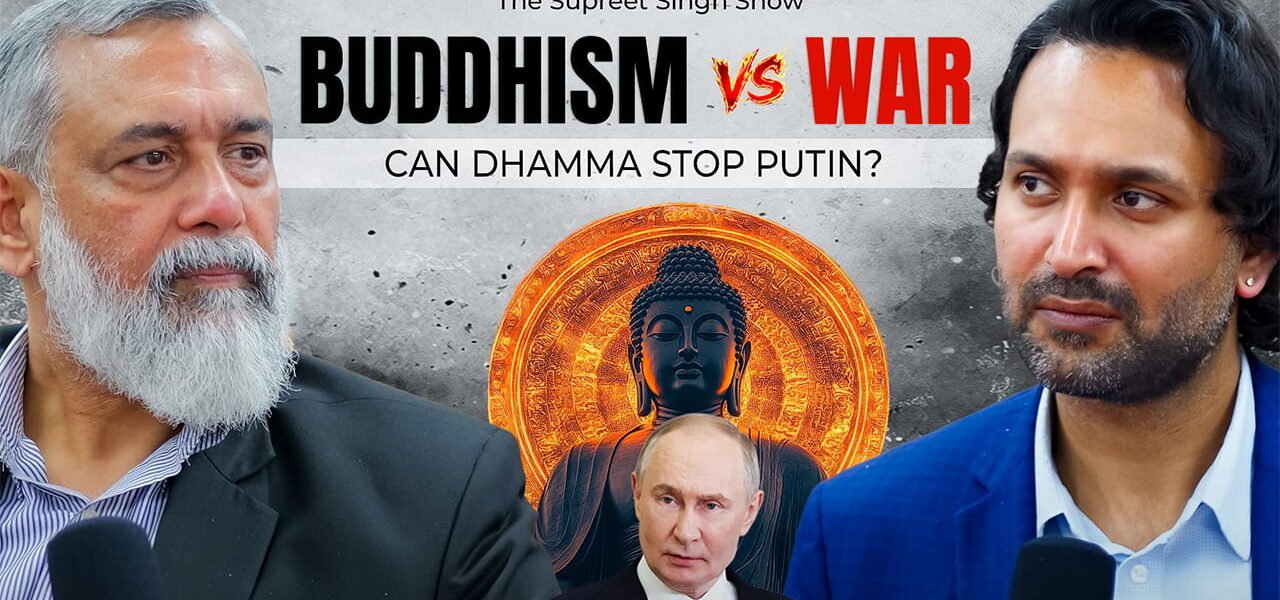
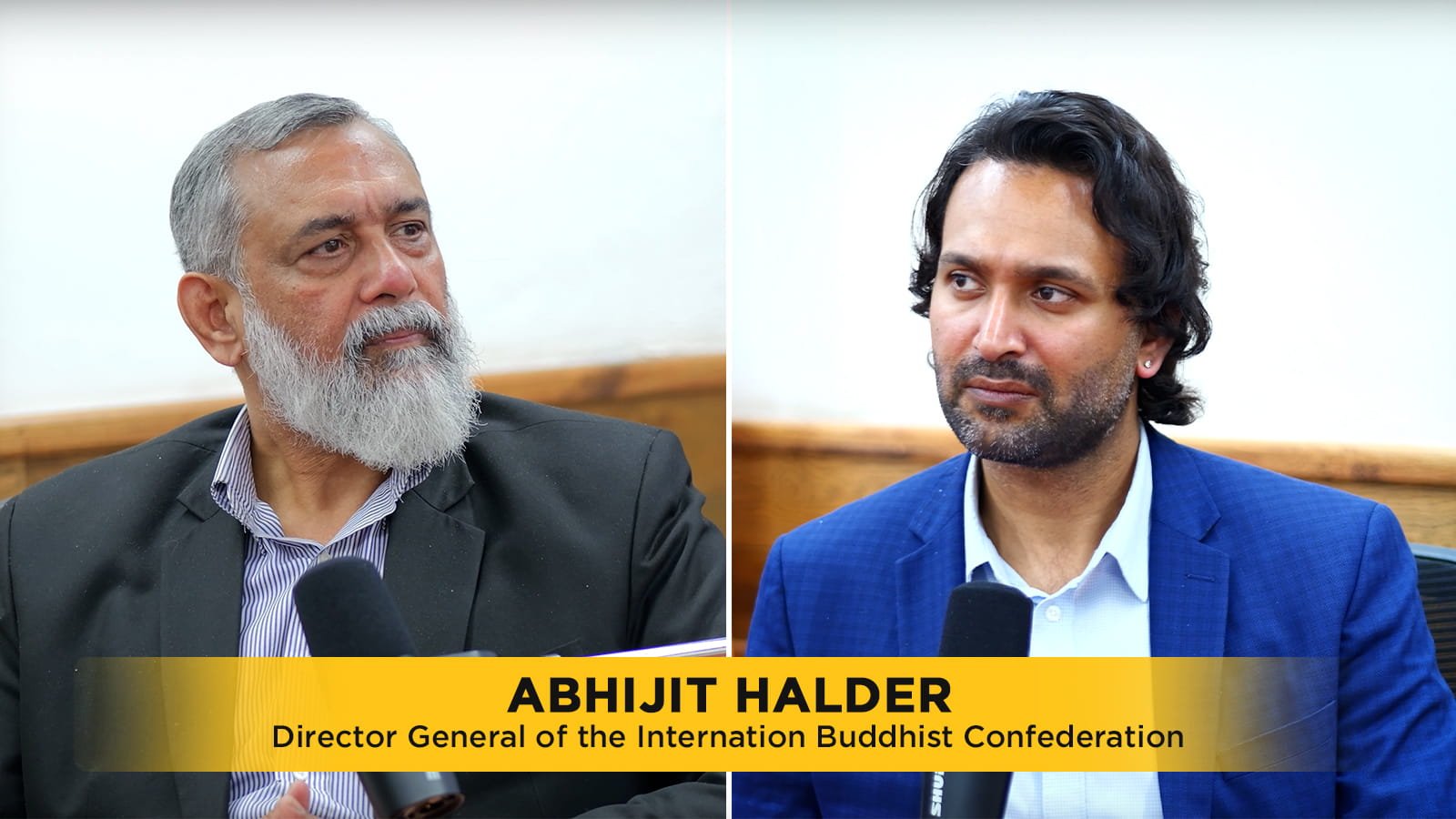
In this episode of The Supreet Singh Show, Supreet Singh interviews Abhijit Halder, Director General of the International Buddhist Confederation (IBC), to examine how Buddha Dharma guides solutions to modern challenges. The conversation covers the intersection of Artificial Intelligence and Dharma, the Global Buddhist Summit’s mission, and connects history, spirituality, and public policy. Halder’s extensive government and IBC experience offers insight into leadership, digital mindfulness, and cultural diplomacy. Listeners seeking actionable wisdom for life, work, and community will find valuable guidance here.
This episode presents a comprehensive yet practical perspective on how the Buddha Dharma’s universal values, compassion, wisdom, nonviolence, and self-trust, remain urgently relevant. Halder traces the vision behind the Global Buddhist Summit, designed to gather monks, scholars, and leaders under one roof to debate today’s pressing issues while distilling Buddha’s teachings for a modern world. He reflects on the emotional energy of relics’ journeys, the solemnity of Theravada chanting, and how devotion, not just employment, drives IBC’s work. The discussion then pivots to mindfulness in a hyper-digital age, the psychological toll of misinformation, and actionable routines that restore focus and inner stability. With Halder’s calm, steady demeanor and global experience, you’ll hear a thoughtful framework for ethical leadership, spiritual diplomacy, and nurturing shared values across borders.
The conversation opens with a surprising yet timely connection: as science advances, Buddha Dharma’s insights into the mind, ethics, and interdependence become more, not less, relevant. Halder explains how the Global Buddhist Summit was designed to convene the Sangha and scholars from many countries to debate tangible world issues, from technology ethics to social harmony, through a Buddhist lens. The goal is not to intellectualize Dharma but to distill its timeless teachings and propagate them globally in ways people can live, not just admire. That means asking hard questions about AI’s alignment with human well-being, the cultivation of compassion in digital systems, and building public conversations where wisdom, restraint, and responsibility are the norms, not the exception. In an era of acceleration, Buddha Dharma offers the brake and the compass.
Addressing today’s conflicts, from Eastern Europe to the Middle East, Africa to Latin America, Halder emphasizes interdependence, the insight that no community thrives in isolation. The COVID-19 pandemic, he argues, functioned as a global wake-up call about living in harmony with nature and how suffering ignores status. Against cynicism, he returns to the Buddha’s revolutionary teaching: trust yourself, remain mindful, and cultivate critical thinking rather than outsourcing your agency to any guru or authority. As Deep Root Podcasts listeners know, insight without action is noise. Halder translates Dharma into civic virtues, non-violence, mutual understanding, and steadiness—applicable to policy, leadership, and everyday conduct. In a world caught between power and fear, Dharma insists on courage with compassion, clarity without cruelty, and strength without domination.
Abhijit Halder defines mindfulness as conscious presence—being fully aware of each action and word, especially in communication. That discipline becomes vital when social media’s velocity compresses attention and disinformation distorts reality. Rather than doomscrolling, he urges discernment: avoid engaging with doubtful posts, prioritize verified facts, reduce screen time, and read books to rebuild deep focus. IBC, he notes, convenes scientists, scholars, and experts worldwide to connect Dharma with AI, neuroscience, peacebuilding, and mental well-being, then opens those insights to the public. Practically, he recommends phone-free buffers before sleep and after waking, morning attention to nature (sky, wind, grass), and evening daily reflection. These small commitments reawaken imagination and cognitive stamina—the very capacities that fast content quietly erodes.
The Global Buddhist Summit celebrates India as Buddha’s birthplace while uniting global Buddhist traditions to document Dharma’s application to today’s issues. Its rapid growth, drawing participants from 40+ countries, signals a rising appetite for value-based dialogue. Halder frames this as spiritual diplomacy: a quiet backdoor to ease geopolitical tensions by nurturing shared ethical ground. He highlights Vipassana as a proven method for personal transformation, already recognized in parts of Indian governance, and envisions courses on Dharma and leadership within universities and bureaucracies. Internationally, he points to efforts to frame Dharma as a universal philosophy, akin to how Yoga Day found global resonance, opening space for cooperation even between rivals. From India–China–Nepal dynamics to the safeguarding of monasteries and monks, the episode models how policy, culture, and spirituality can align without losing integrity.
For listeners seeking substance in India podcasts, this conversation delivers clear guidance. Halder blends diplomatic insight and Buddhist humility, showing practical ways to apply Buddha Dharma to work, leadership, and family. Learn to approach AI ethics with compassion, regain attention, and see heritage as a unifying force. Supreet Singh directs the dialogue to actionable insights, preserving tradition’s wisdom. Fans of Deep Root Podcasts will find an episode worth sharing.
This episode speaks to students under digital pressure; entrepreneurs and operators making values-led decisions; policymakers and administrators pursuing humane governance; educators and leaders cultivating ethical cultures; seekers drawn to rigorous inquiry. It resonates with creators, tech builders, and AI teams integrating human-centered principles into their work. Whether part of the Tricity creator economy, public service, or seeking purpose, Halder’s blend of mindfulness, heritage, and leadership provides a steady compass. Consider it practical Dharma—rooted in India, relevant everywhere, and delivered with calm precision.