

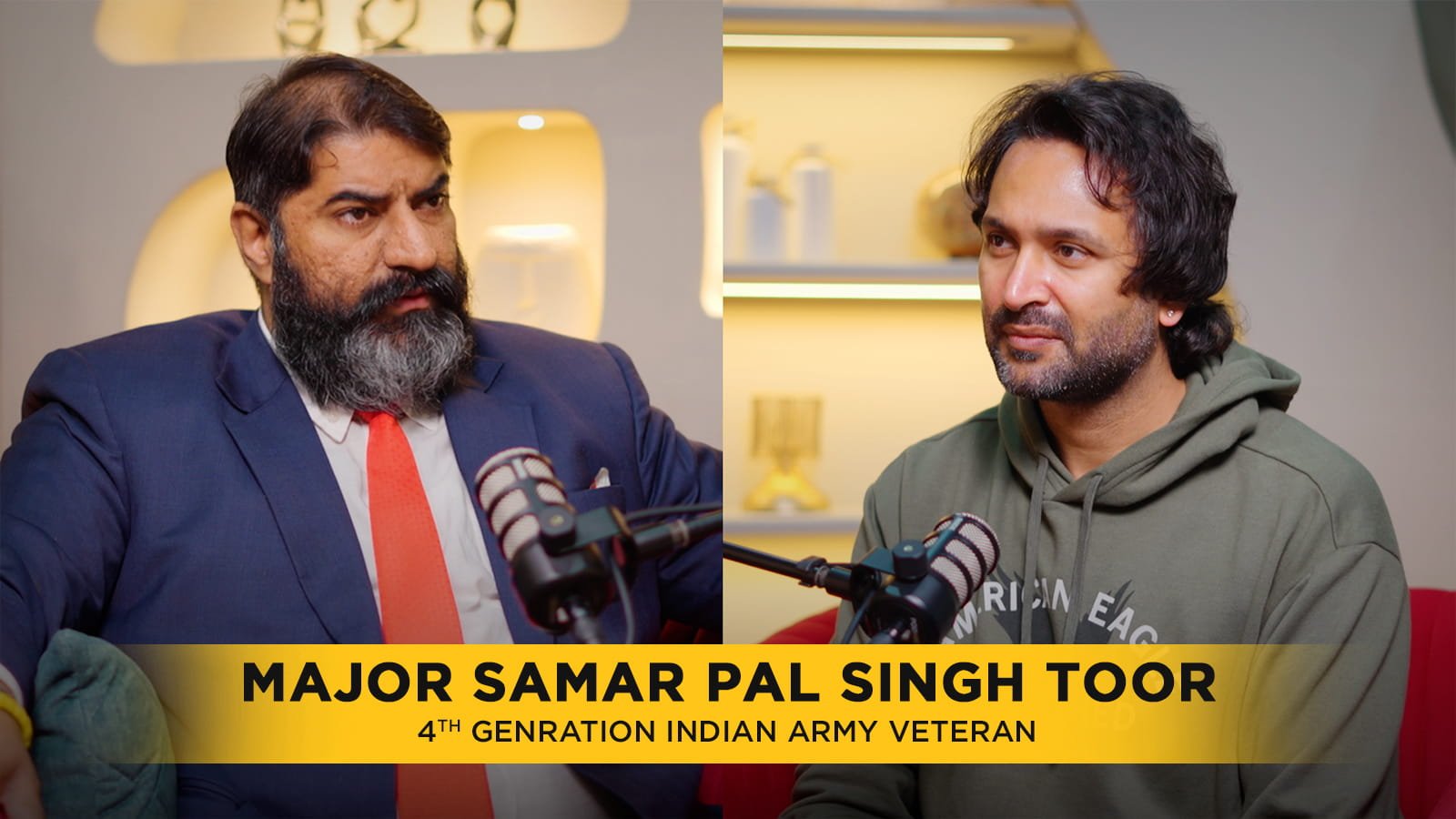
In this powerful episode of The Supreet Singh Show, host Supreet Singh sits down with Major Samar Pal Singh Toor, a fourth‑generation Indian Army officer from the 8th Battalion, Rajputana Rifles, for an unflinching look at the ground truths shaping India’s security landscape. From Siachen and Kashmir to a UN peacekeeping mission in South Sudan, Major Toor’s lived experience underpins a conversation that bridges battlefield realities, drone‑enabled modernization, and the ethos of national responsibility. As a Republic Positive Influencer, speaker, and defense commentator, he dissects Operation Sindur, evolving terror tactics (including the rise of drones), and the complex web of geopolitics, media conduct, and political discourse. If you value Deep Root Talk, honest, root‑level clarity, you’ll find this a must‑watch showcase of the rigor that defines the best podcasts in India.
This episode explores the convergence of military doctrine and cutting-edge technology, anchored by Major Toor’s advisory role with Zulu Defense and RF Nano Composites, where modular, future-proof drones are being designed for India’s special forces, marine commandos, and infantry. We unpack his candid views on India–Pakistan relations, the historical context surrounding POWs, insurgency dynamics in Baluchistan, and the operational security mindset behind India’s successes, including Operation Sindur. Beyond conflict, we examine media responsibilities, political maturity, and the leadership values that sustain resilience under pressure. Expect clear frameworks, pragmatic lessons, and a sober appreciation for what it takes to defend a nation in the modern era—hallmarks that keep Supreet Singh and this platform among the top podcasters in India and within the culture of Deep Root Podcasts.
Major Toor details how Zulu Defense, a multi-founder defense startup, and RF Nano Composites are developing stealthy, high-endurance, modular drones that integrate new chipsets and payloads seamlessly, designed to deliver a decisive punch in contested environments. He explains why “ghost mode” capabilities, secure communications, and rapid field upgradability matter for special forces operating behind enemy lines. By building India‑first systems, these teams reduce external dependency and tailor platforms for terrain, weather, and EW threats faced by the Indian armed forces. For founders and operators, this segment offers playbook‑level clarity on dual‑use innovation, how to align with operational doctrines, and the patience needed to ship mission-ready hardware in a national‑security context.
From the 1971 war and the enduring question of 53 Indian POWs to the structural role Pakistan’s military plays in its politics and economy, Major Toor presents a hardline assessment rooted in experience and open‑source history. He argues for a clear strategic posture: learn from past concessions, refuse avoidable risks, and prioritize operational secrecy over performative transparency during active conflict. His take on Baluchistan—its grievances, the state of insurgency, and the region’s deprivation—ties into a broader thesis about information warfare and how narratives can obscure ground reality. Throughout, the emphasis remains on practical deterrence, disciplined communications, and the long game of national strength.
The episode tracks the evolution of terror tactics, including the use of drones for surveillance, delivery, and psychological pressure. Major Toor discusses the convergence of groups—from TTP to BLA/BLF/BRA—and how regional alignments can amplify cross‑border threats. He points to Indian intelligence and security agencies that have systematically disrupted sleeper cells and collaborators, while urging vigilance in urban and tourist hotspots. The key insight: technology is neutral; deterrence and decisive responses depend on capability, doctrine, and secrecy. Listeners get a grounded understanding of why airspace denial, EW, and counter‑UAS measures are central to the next decade of security planning, and India podcasts that treat national security with maturity.
In analyzing Operation Sindur, Major Toor underscores the strategic virtue of restraint—not disclosing attrition, targets, or tactical assessments while operations are ongoing. He contends that media discipline and strategic communication helped keep adversaries confused and reactive, while shaping public morale at home. For operators, communicators, and policymakers, this segment delivers a crisp reminder: information control is a weapon. It protects future plans, obscures capability reveal, and prevents the enemy from conducting cost‑benefit analysis on our moves. If you appreciate Deep Root Talk—the kind that prioritizes root‑cause thinking over virality—this is among the strongest, clearest articulations of the “silence saves lives” doctrine you’ll find on any podcaster in the Mohali platform.