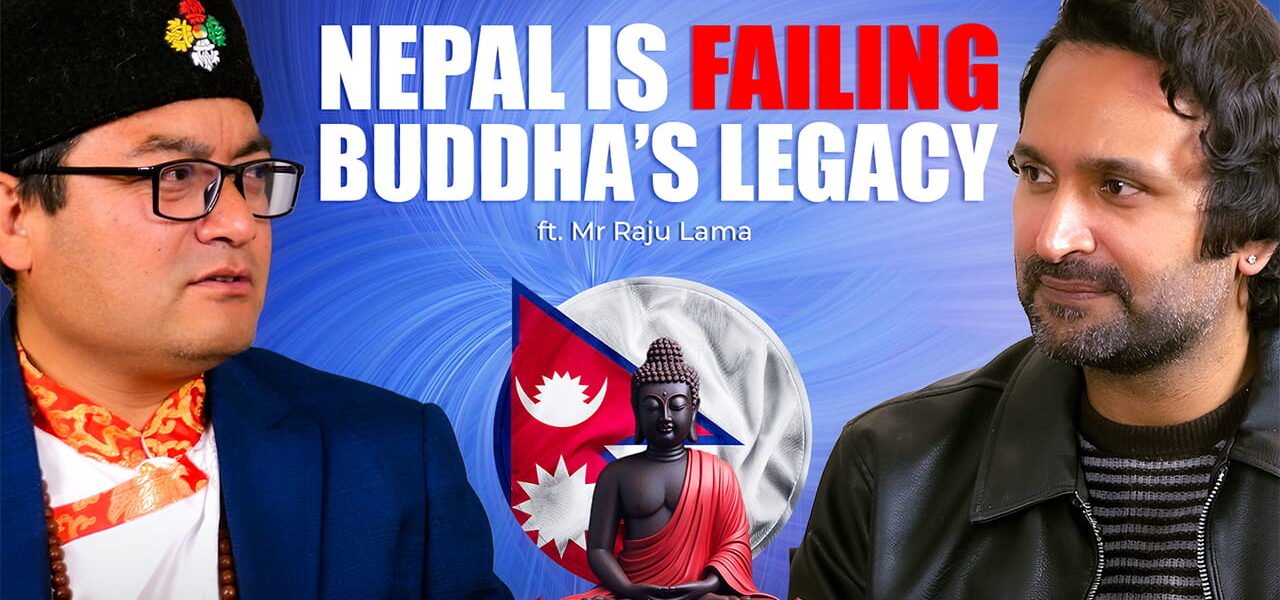
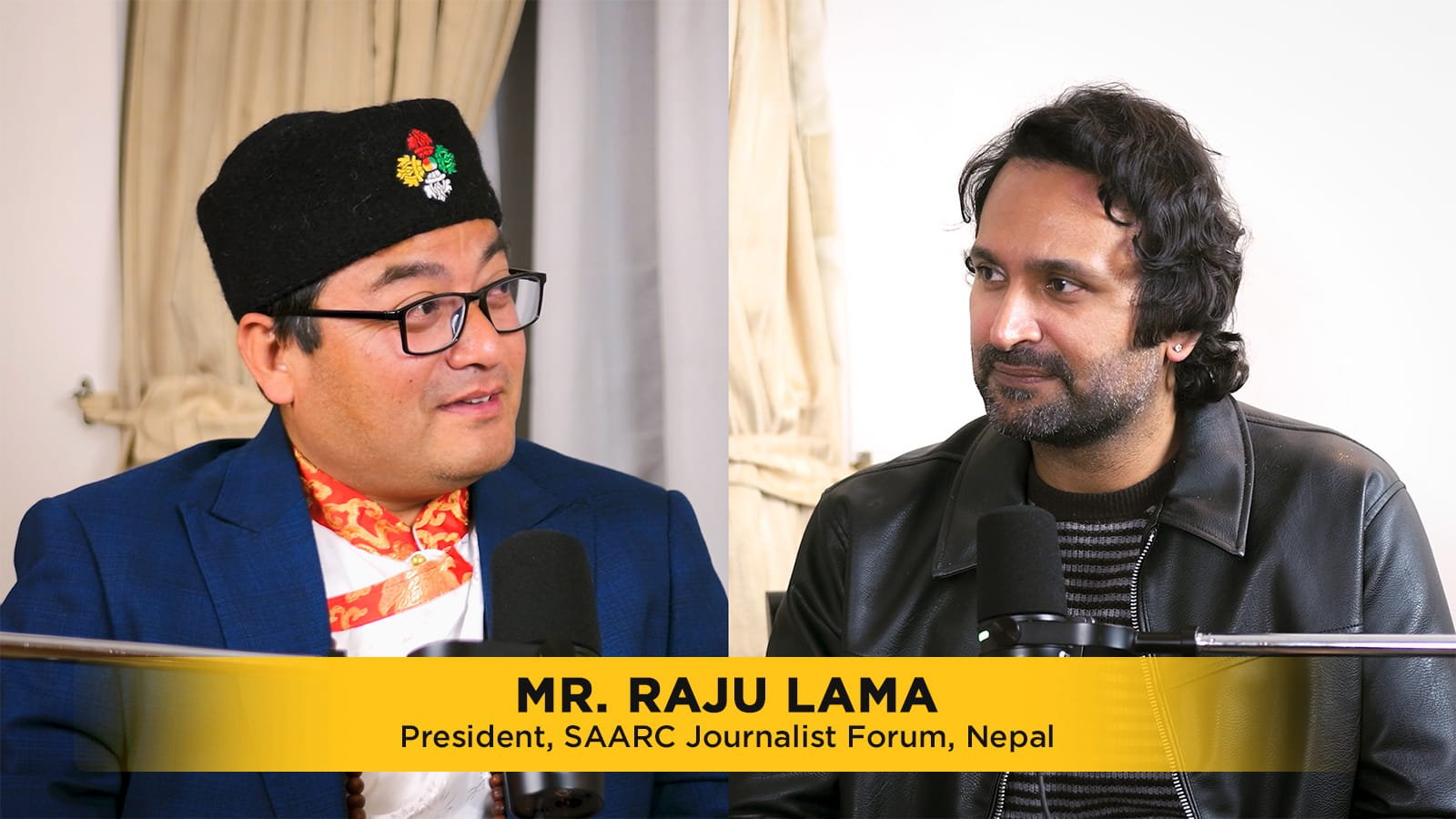
In a world shaped by conflict, division, and uncertainty, conversations around peace and spirituality have never been more important. This episode of The Supreet Singh Show brings an extraordinary perspective from international artist and peace advocate Raju Lama, who reflects on the transformative power of Buddhism and India’s role as the spiritual nucleus of the world. From the significance of the Second Global Buddhist Summit to the historic return of Buddha’s relics after 127 years, this dialogue uncovers how ancient wisdom continues to guide global harmony in the modern era. Rich with insights on spirituality, geopolitics, South Asian unity, and moral values, this episode offers a profound reminder that Buddha’s message of compassion, peace, and coexistence remains the ultimate path forward for humanity.
In this deeply reflective conversation, Raju Lama shares a heartfelt message about Buddhism’s global relevance and India’s irreplaceable contribution to spiritual civilization. The episode breaks down the importance of the Global Buddhist Summit, a unique platform where scholars, monks, and world leaders come together to revive and reinterpret Buddha’s teachings for today’s world. Lama also discusses the monumental return of Buddha’s sacred relics, emphasizing that this act symbolizes a renewed global commitment to peace amid rising international tensions. The dialogue expands into India–Nepal cultural ties, the complexity of South Asian politics, the philosophical roots of Buddhism, reincarnation traditions, and India’s identity as a global spiritual powerhouse. This episode beautifully blends spiritual wisdom with real-world relevance.
The episode opens with reflections on the Second Global Buddhist Summit, hosted in India, Buddha’s birthplace and the heart of Buddhist thought. According to Raju Lama, the summit is more than an event; it is a spiritual movement uniting thinkers, leaders, and practitioners from more than 37 countries. Discussions revolve around Buddha’s universal ideals—peace, compassion, and freedom—values that hold immense significance in a fractured world. With India leading the way, the summit stands as a beacon of hope, reminding humanity that world progress depends on collective wisdom and moral clarity rooted in Buddha’s teachings.
One of the most powerful moments in the conversation is the return of Buddha’s relics to India after 127 years, facilitated by the Indian government. For Lama, this is not just history; it is a divine message urging India and the world to walk the path of peace. As global geopolitical tensions rise, the relics symbolize unity, compassion, and spiritual responsibility. Lama credits the Indian government and Prime Minister Narendra Modi for safeguarding Buddhist heritage and amplifying Buddha’s message for the modern era.
Moving deeper, the discussion highlights the timeless cultural and spiritual bond between India and Nepal—two nations united as “sons of the same father,” rooted in Buddhist and Hindu history. Lama expresses concern about Nepal’s political instability, corruption, and missed opportunities to promote Buddhism. He calls for a united India–Nepal front to spread Buddha’s philosophy globally. According to him, if both nations collaborate spiritually, academically, and culturally, they could revive Buddhism’s global influence and inspire millions.
A major portion of the episode deals with the realities of the South Asian political landscape. The region remains one of the world’s most conflict-prone areas, with long-standing tensions among India, Pakistan, Afghanistan, and Bangladesh. Lama emphasizes that world peace is impossible without South Asian peace. India, being the most influential nation in the region, has a responsibility to lead dialogue and foster understanding. Echoing Atal Bihari Vajpayee’s words—“We can change friends, but not neighbors” — the conversation highlights the importance of coexistence, diplomacy, and cultural unity.
The episode beautifully transitions into Buddhist philosophy, where Lama explains deep spiritual concepts, including the six realms (lokas), ranging from godly worlds to human existence and the realms of suffering. He emphasizes the moral law of karma, the continuity of life through reincarnation, and the importance of ethical living. Lama highlights the Five Precepts (Panchsheel) as Buddha’s blueprint for a peaceful society: no lying, no stealing, no sexual misconduct, no false speech, and no greed. These timeless principles, he says, are essential to cultivating inner and outer peace.
The conversation becomes personal as Lama speaks about his family’s Bonpo lineage, a Tibetan spiritual tradition respected by the Dalai Lama. He recounts mystical experiences during rituals, including sensing ancestral and divine presences. Lama explains how Tibetan Buddhism and Bon traditions coexist, enriched by reincarnation practices such as those involving the Dalai Lama and Panchen Lama. Through these stories, listeners gain insight into Buddhism’s profound spiritual depth and cultural richness.
Toward the end, Lama passionately describes India as “a piece of heaven,” the spiritual center of the world. He believes India’s strength lies in its spirituality, resilience, and cultural harmony. Despite centuries of challenges, India stands unshaken, held together by faith and philosophy. He contrasts this with China’s unity driven by technology, emphasizing that India’s spiritual heritage uniquely positions it to guide humanity toward peace and enlightenment.