
Every time the future of healthcare comes up, the conversation drifts to the same place – more hospitals, more beds, more buildings. And yes, we need those. But after thirteen years of building a pharmaceutical company in India, I’ve started to believe we’re often solving for the wrong number.
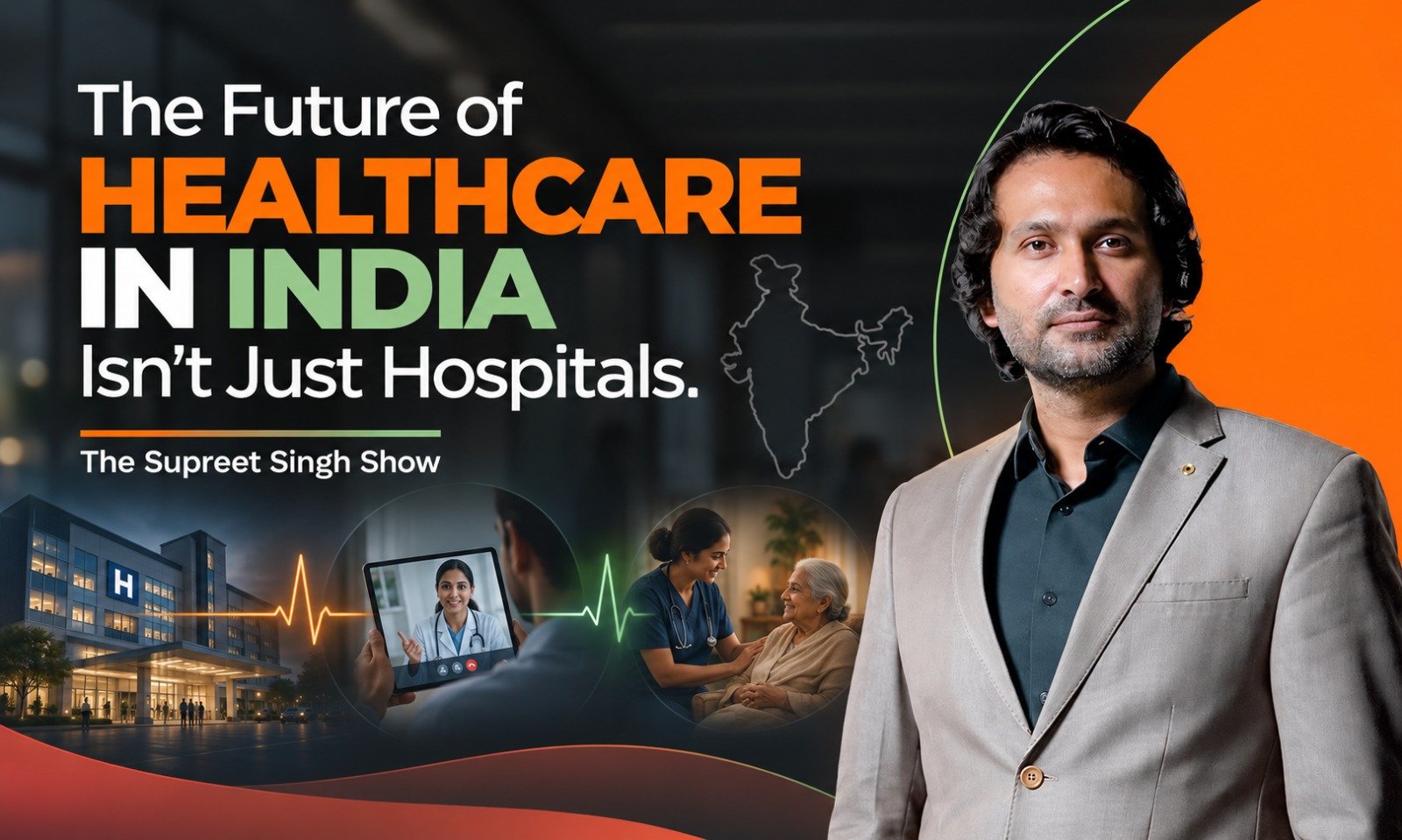
The future isn’t just about building more. It’s about building smarter – systems that connect, remember, and respond.
The parts of the system that still break
Walk through almost any healthcare journey in India and you’ll hit the same friction. Paper prescriptions that get lost. Queues that eat up half a day. Waiting for times, nobody can predict. Patient information scattered across clinics that never talk to each other.
None of this is because we lack good doctors. We have some of the best. It’s because too much of the system still runs manual effort – and manual effort simply doesn’t scale to 1.4 billion people.
Where technology genuinely helps
This is where health tech in India can change the game – not by taking over, but by taking the load off. AI can quietly handle repetitive work, so doctors spend more time with patients and less with paperwork. Connected devices and IoT can make monitoring continuous instead of occasional. Digital platforms can turn a chaotic appointment process into something that finally feels seamless.Used well, technology gives clinicians their time back. That’s the part people tend to miss.
The part we don’t talk about enough
Here’s the uncomfortable truth: technology alone won’t transform healthcare. India isn’t one market. We’re building a country with wildly different levels of digital access, literacy, infrastructure, and – most importantly – trust. A polished app that works beautifully in a metro city can be useless in a village with patchy internet and a patient who has never booked anything online.
So the question was never really “Can we build the technology?” We can. The harder, more honest question is: “Can we build technology that people will actually use and trust?”
What “usable and trustworthy” really means
To me, health tech that earns its place has to be a few things at once. Accessible enough for someone with a basic phone. Simple enough that it doesn’t need a manual. Secure enough that people feel safe handing over their health data. Affordable enough that cost isn’t a wall. And above all, human-centric – built around the patient, not around the software.
Miss any one of those, and adoption quietly dies, no matter how clever the tech is.
No single player can do this alone
This is bigger than startups. Real transformation in Indian healthcare will need technology companies, doctors, hospitals, policymakers, and patients all pulling in the same direction. Startups bring speed. Doctors bring reality. Policymakers set the rules of trust. And patients tell us, every single day, what’s actually working and what isn’t.
We’re only at the beginning
The biggest opportunity in Indian health tech isn’t digitizing what already exists. It’s reimagining how healthcare should work in the first place.
The health tech revolution in India has genuinely started. But make no mistake – we’re still at the very beginning. And that, to me, is exactly what makes this moment worth paying attention to. What do you think will drive the next big transformation in Indian healthcare? I’d genuinely love to hear your take.