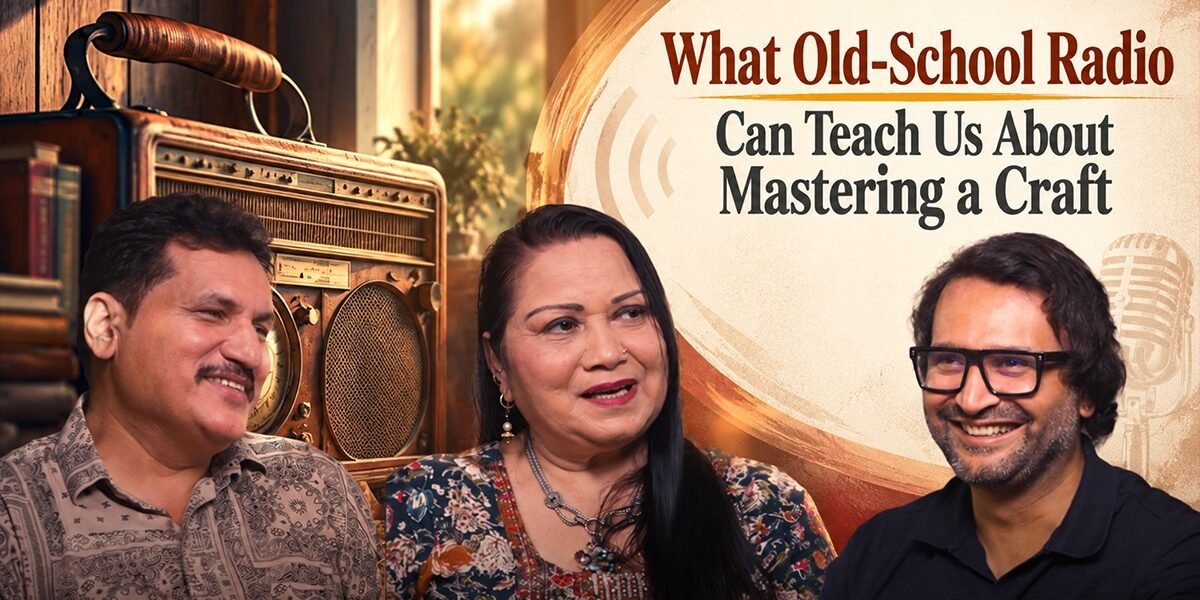
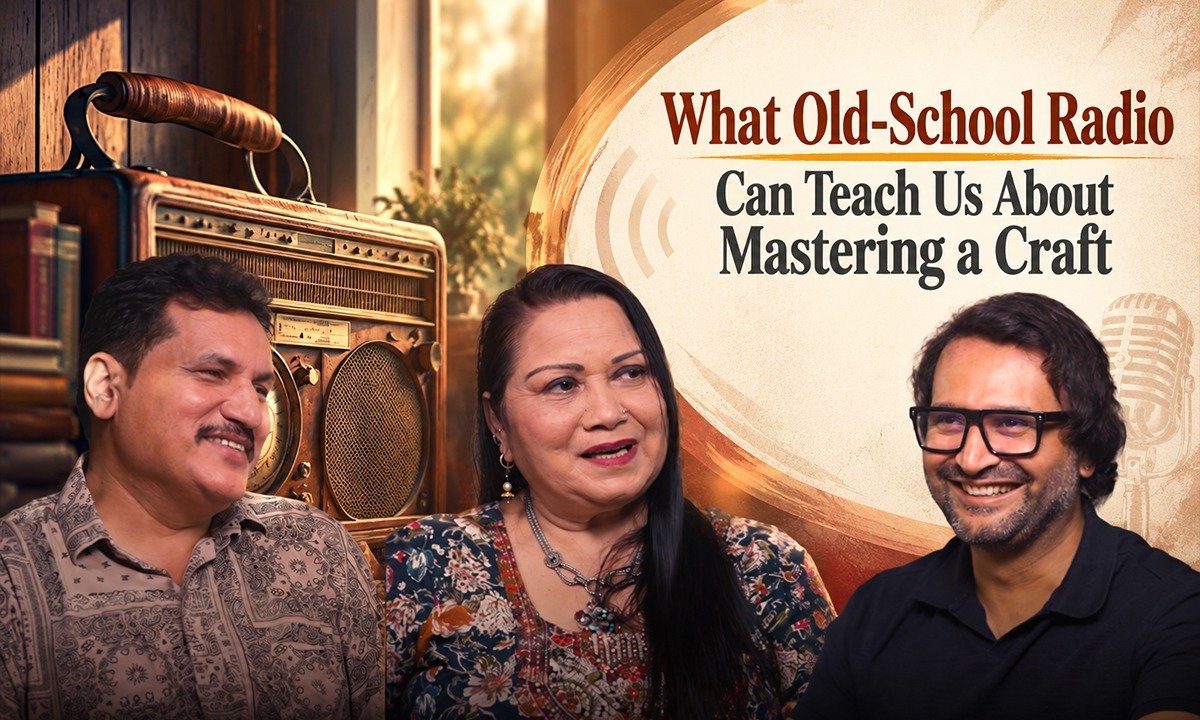
- We tend to picture radio as someone simply talking into a microphone. Easy, casual, low stakes. But after hosting veteran broadcasters Ramesh Kapoor and Kulveer Kapoor on The Supreet Singh Show, that assumption fell apart completely. Old-school radio wasn’t simple at all. It was one of the hardest crafts anyone could master, and the people who survived it came out sharper for it. Here are three things that made it so demanding.
Live Consoles with No Room for Error
Everything happened in real time. There was no editing, no retakes, no comforting phrase like “we’ll fix it in post.” One wrong move on the console, one missed cue, and the entire country heard it instantly. Imagine working under that pressure every single day. There was nowhere to hide. That environment forced a level of focus most modern jobs never require, because the cost of a mistake was immediate and public.
Timing Measured to the Second
Scripts had to fit exact windows, down to the second. You couldn’t run fifteen seconds long or wrap up twenty seconds early. Everything had to land precisely where it was supposed to. Reading with that kind of accuracy, life, day after day, builds a discipline that’s genuinely rare. Broadcasters developed an internal clock so reliable it became instinct. That skill didn’t come from talent alone. It came from repetition under real constraints.
Building an Entire World with Just Sound
There were no visuals to lean on. Broadcasters created full soundscapes by hand, using DIY effects and carrying entire scenes through voice modulation alone. Every emotion had to travel through the ear, or it didn’t travel at all. That’s a remarkable creative demand. They painted pictures in the listener’s mind with nothing but audio, and they made it feel real.
The Constraints Didn’t Limit Them. They Made Them.
That kind of environment didn’t just produce broadcasters. It produced professionals. People trained in time management, adaptability, and grace under pressure, simply because the medium accepted nothing less.
We often assume old ways were simpler. Usually, they were just harder in ways we’ve quietly forgotten. The limitations we imagine holding people back were actually the very things that shaped their skill. There’s a lesson here that reaches far beyond the radio. In almost every field, the tougher old methods built deeper expertise. Friction wasn’t an obstacle. It was training.
So, here’s a question worth sitting with: what’s a “harder old way” from your own field that quietly built better professionals? The answer might reveal something we lost when things got easier, and something worth holding onto.
Watch the full conversation with Ramesh Kapoor and Kulveer Kapoor on The Supreet Singh Show.