

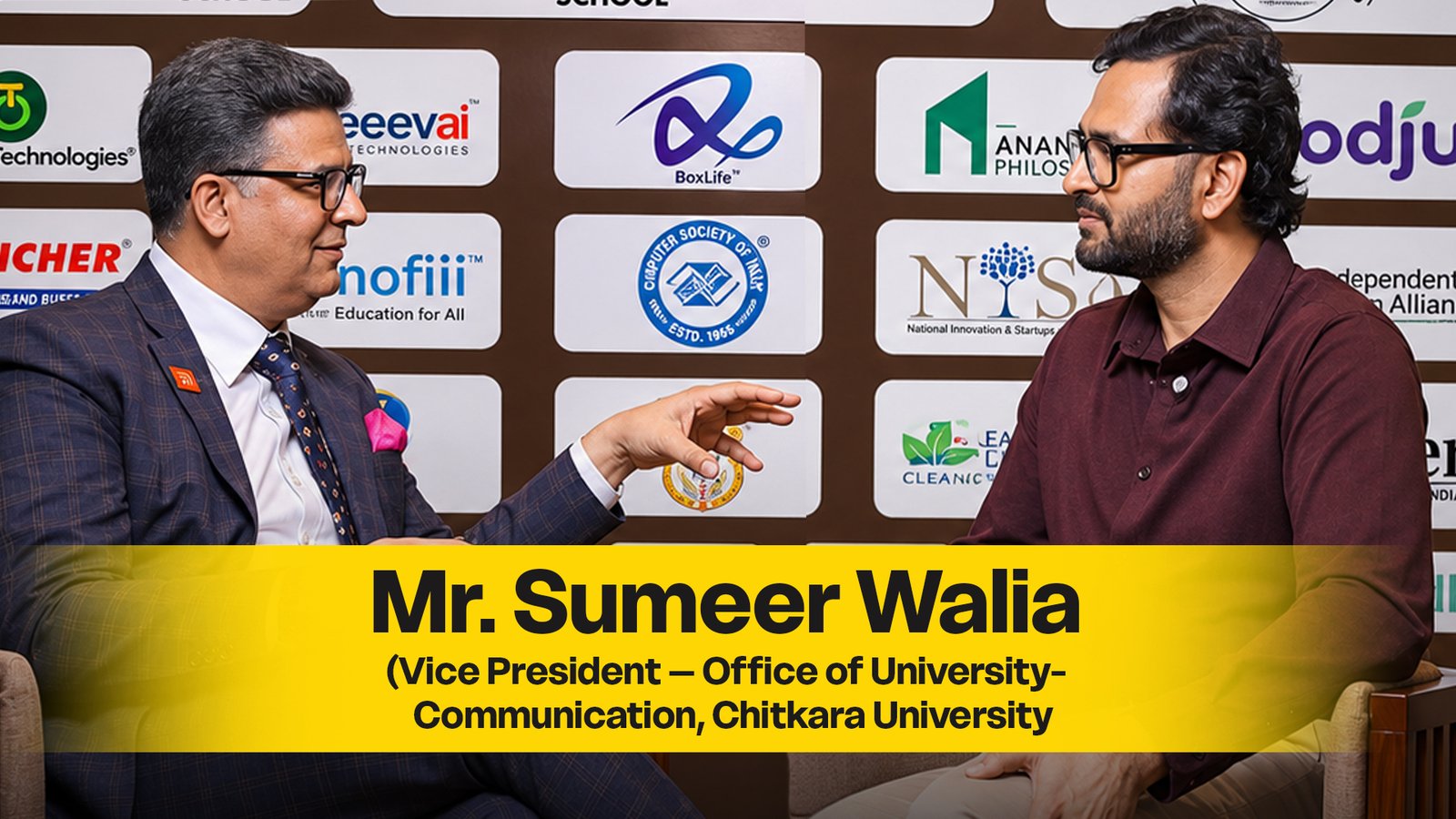
In this episode of The Supreet Singh Show, recorded at Eduthon at Chitkara University, Sumeer Walia, Vice President of the Office of University Communication, discusses spirituality, the values of the new generation and the importance of balance in everyday life. He argues that much of today’s stress comes from living without awareness, and that the remedy lies in simple, consistent habits.
Mr. Walia suggests that alongside IQ and EQ, we should think about a spiritual quotient. When it is in good shape, he says, the other two improve as well. Drawing on the Upanishads, Sanatan Dharma and Sikhism, he describes life as a balance between intellect, physical strength and inner strength. When one swings too far, stress creeps in and quiet happiness slips away. His answer is santokh, contentment, and a habit of regularly clearing out one’s thoughts.
He credits his own grounding to moral science classes at Sacred Heart Convent School in Ludhiana and to elders at home who sat with children and talked to them. The idea he keeps returning to is keeping the “chamber” of the heart clean, free of hatred towards anyone. That leads to one of the most practical points of the episode: forgiving is not the same as forgetting. Memories stay, sometimes resurfacing in a dream decades later. Forgiveness is still in our hands. It is also not the same as ignoring someone, which, he argues, only feeds the ego.
Asked whether Gen Z and Gen Alpha are more spiritual than millennials, Mr. Walia’s answer is honest. It depends on what spirituality means to each person, and parents should guide rather than impose. At 18 or 20, he says, most of us were thinking about bikes and how we looked in the mirror. Spirituality usually arrives after we have fallen and got up a few times. His view of happiness is refreshingly simple: wake up on time, eat on time, sleep on time, talk around the dinner table, go on picnics, listen to music. He recalls earning ₹1,000 a month and feeling richer in joy than many people do today. Now five people in a family can sit in one room, each lost in a phone. So he takes phone-free Sundays with his family.
As someone who meets thousands of new students every year, he sees the new generation as practical, clear and driven, with big dreams and fewer distractions than people assume. They are less sentimental and more likely to ask “why”, focusing on their rights where earlier generations focused on duty. He recalls hosting 12 or 13 teenage founders at home, more interested in each other’s ventures than the seven-course meal. For employers, he recommends taking time over hiring, including informal meetings with colleagues and proper personality assessment, because it takes time to see who someone really is.
On his own balance, he talks about saying no to plans that bring no real joy, accepting that he will sometimes miss the gym, and using his 40-minute drive alone as time to think. He also makes a strong case for theatre, which teaches young people to process emotions and step into someone else’s shoes. The takeaway from the episode is straightforward: forgive without needing to forget, keep the basics of daily life simple, put the phone down more often, and spend real, quality time with yourself.